Capstone: Wet-Dry Cycler (RNA Replicator)
Origins of Life Simulation Device for Prebiotic Research
Project Overview
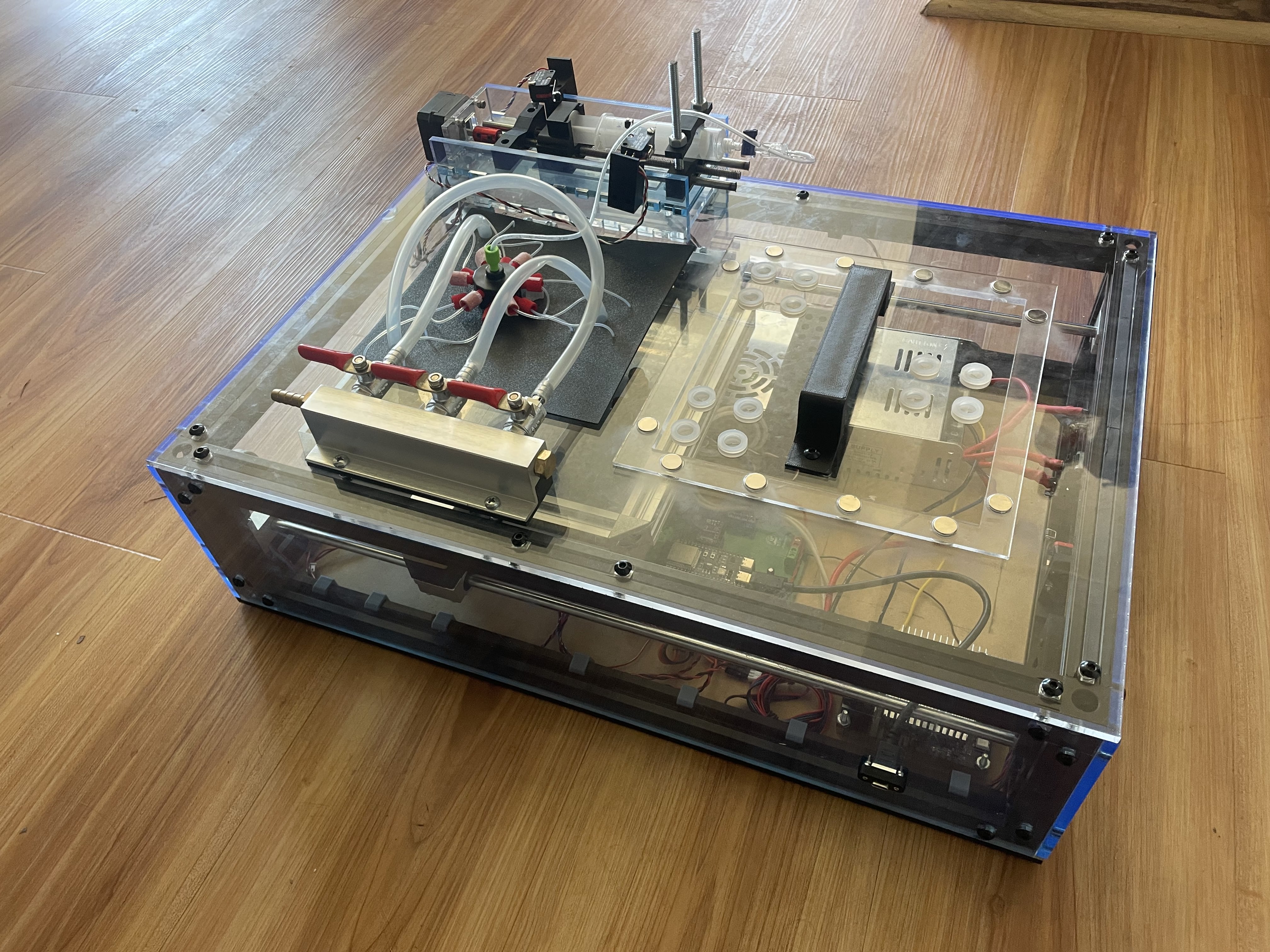
As Project Director for this capstone project, I led the development of an automated device designed to simulate prebiotic wet-dry cycling conditions. This innovative system aids in RNA/DNA polymerization research with direct applications in siRNA production and origins of life studies.
The wet-dry cycler recreates the environmental conditions theorized to have existed on early Earth, where alternating wet and dry cycles may have facilitated the formation of complex organic molecules and the origins of life. Our device provides researchers with a controlled, repeatable environment to test these hypotheses.
Technical Specifications
Hardware Components
- Microcontroller: ESP32 for control and monitoring (WiFi enabled)
- Temperature Control: Precision heating elements with PID control
- Humidity Management: Automated humidification and dehumidification systems
- Sample Chambers: Multiple independent reaction vessels
- Sensors: Temperature, humidity, and pressure monitoring
- Safety Systems: Automatic shutdown and emergency protocols
Performance Parameters
- Temperature Range: 25°C to 95°C (±0.5°C accuracy)
- Humidity Range: 10% to 95% RH (±2% accuracy)
- Cycle Duration: Programmable from 30 minutes to 24 hours
- Sample Capacity: Up to 12 simultaneous experiments
- Data Logging: Real-time monitoring with local logging and optional cloud export
- Remote Access: WiFi-enabled telemetry and remote status viewing
Design & Development Process
Key Development Phases
- Research & Requirements: Collaborated with biochemistry researchers to understand optimal cycling parameters
- System Architecture: Designed modular system for easy maintenance and upgrades
- Prototype Development: Built and tested multiple iterations with increasing complexity
- Control System Implementation: Developed embedded software for precise environmental control
- Validation Testing: Prototype validation with controlled experimental protocols (biological assays conducted under partner supervision where applicable)
- Documentation: Created comprehensive user manuals and technical documentation
Software & Control Systems
The device features a sophisticated control system built around an ESP32 microcontroller, providing both local and remote operation capabilities. The embedded software implements advanced PID control algorithms for precise temperature and humidity regulation.
Embedded Software
- Real-time operating system (FreeRTOS)
- PID control algorithms
- Sensor data acquisition
- Safety monitoring protocols
- WiFi communication stack
User Interface
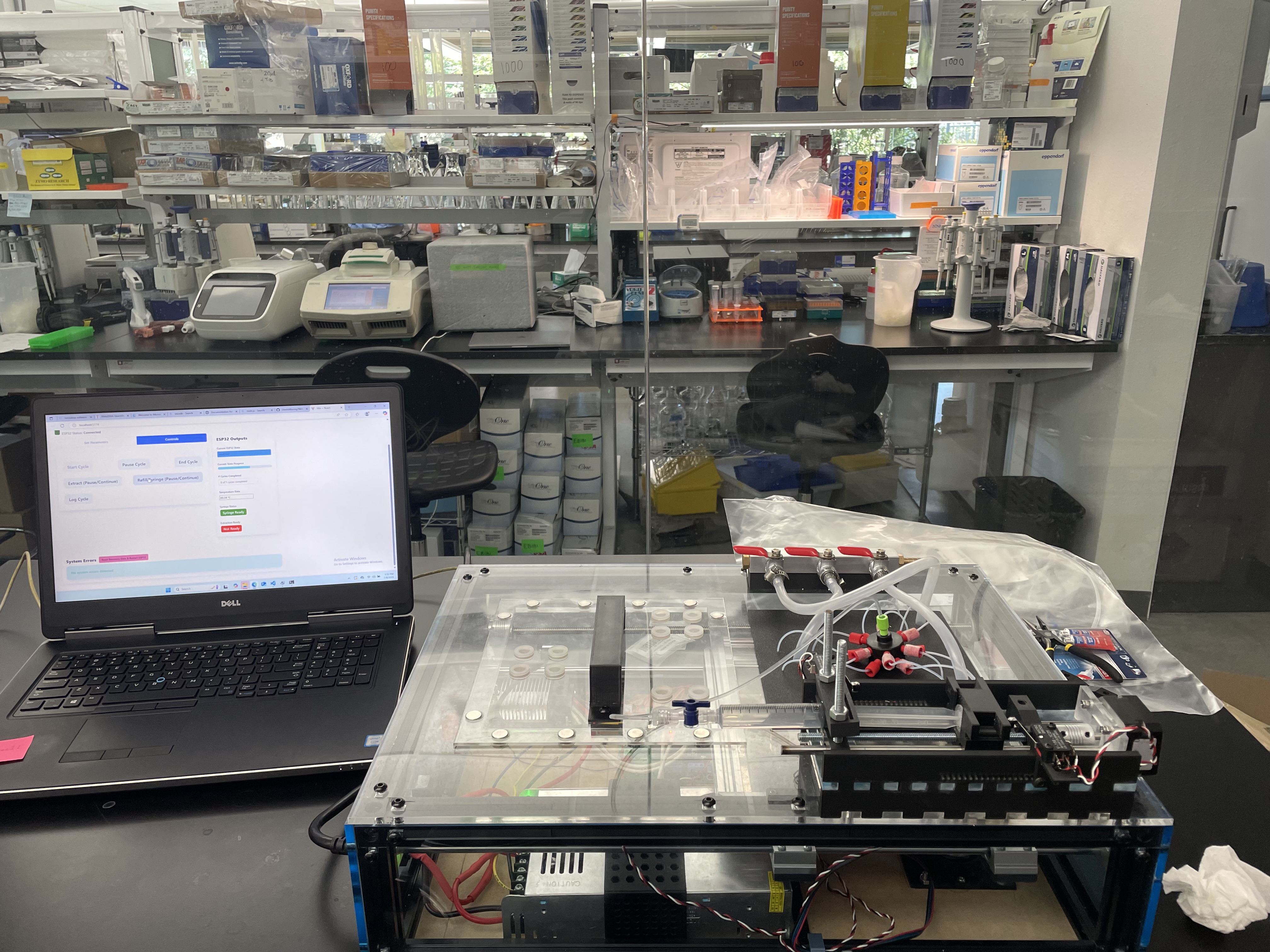
- Web-based control panel (primary UI)
- Mobile app compatibility (experimental/web interface)
- Real-time data visualization (dashboard)
- Protocol programming interface (web-based)
- Alert and notification system (email/push via configured services)
Data Management
- Local data storage (SD card)
- Cloud/export integration (optional data export features)
- Automated data backup (configurable)
- Export capabilities (CSV, JSON)
- Data analysis tools (basic)
Research Applications & Impact
This device opens new avenues for research in several critical areas of biochemistry and astrobiology. The precise control of environmental conditions allows researchers to explore the fundamental processes that may have led to the emergence of life on Earth.
Primary Research Areas
- Origins of Life Studies: Investigating prebiotic chemistry and RNA world hypothesis
- RNA/DNA Polymerization: Understanding environmental factors affecting nucleic acid formation
- siRNA Production: Optimizing conditions for therapeutic RNA synthesis
- Astrobiology: Simulating extraterrestrial environmental conditions
Research Benefits
- Reproducible experimental conditions
- Automated data collection and analysis
- Reduced manual labor and human error
- Scalable experimental protocols
- Cost-effective research platform
Project Leadership & Team Management
As Project Director, I coordinated a multidisciplinary team of engineering and science students, managing project timelines, resource allocation, and technical integration. This role required balancing technical requirements with practical constraints while ensuring project deliverables met research specifications.
Leadership Responsibilities
- Team coordination and task assignment
- Technical decision making and architecture design
- Stakeholder communication and progress reporting
- Quality assurance and testing protocols
- Budget management and resource optimization
Technical Integration
- Mechanical system design and assembly
- Electrical circuit design and PCB layout
- Embedded software development and testing
- System integration and validation
- Documentation and knowledge transfer
Results & Future Development
The completed device successfully demonstrated the ability to create controlled wet-dry cycling conditions suitable for laboratory experiments. Initial prototype tests indicated that the system can reproduce target temperature and humidity cycles. Any biological assays were performed under controlled lab supervision in collaboration with research partners.
Future development plans include expanding the device's capabilities to support additional environmental parameters, integrating advanced analytics, and developing specialized protocols for specific research applications. The modular design ensures easy upgrades and adaptations for emerging research needs.