Professor Piano - Wearable Piano Teaching Glove
Interactive Wearable Technology for Immersive Piano Learning
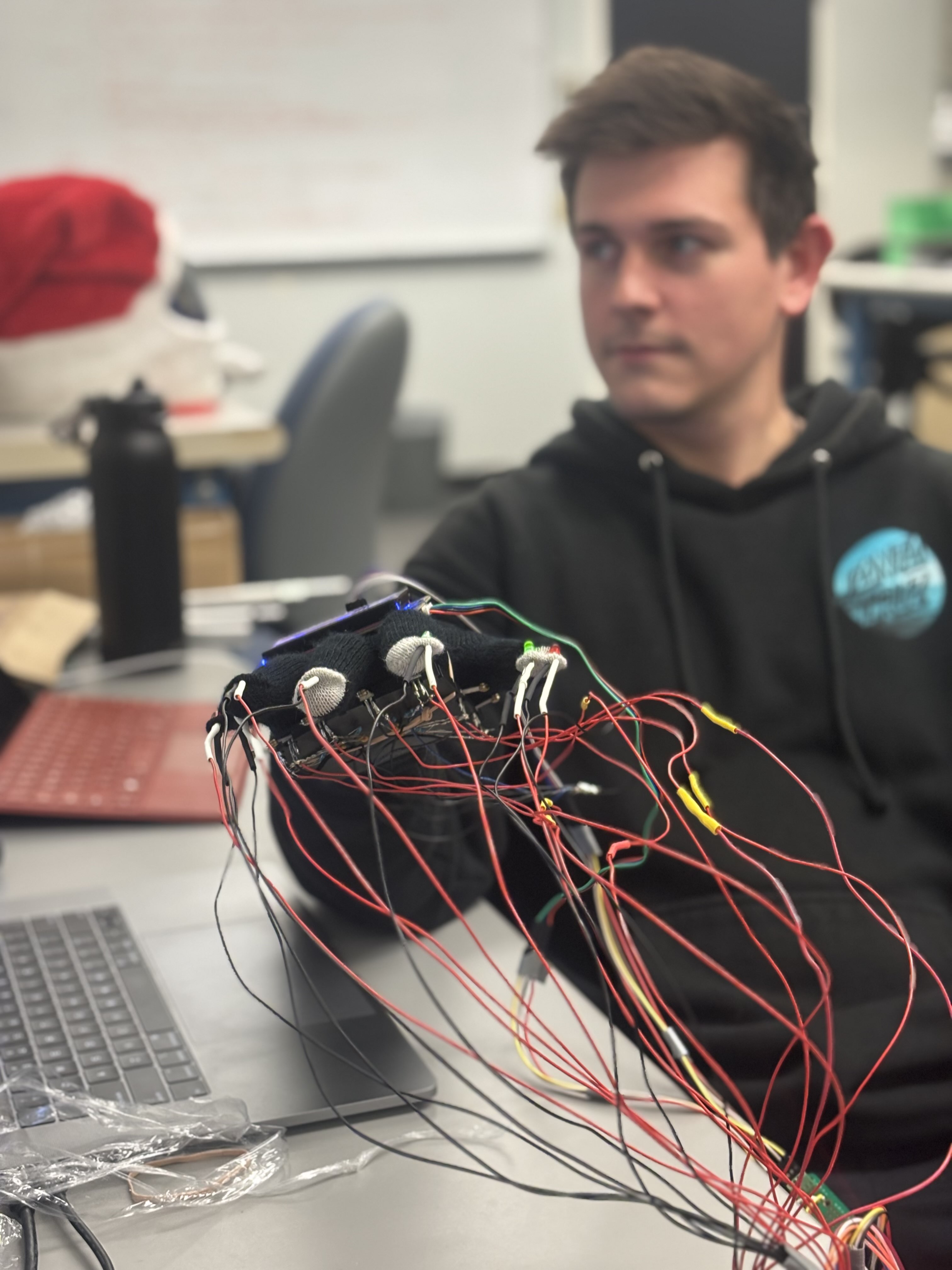
Project Overview
Professor Piano is an innovative wearable piano teaching system that revolutionizes music education through advanced sensor technology and real-time feedback. This cutting-edge glove combines piezoelectric sensors, IMU integration, and I2S audio playback to create an immersive learning experience that guides students through proper piano technique and finger positioning.
The system addresses the challenge of learning piano without constant instructor supervision by providing immediate tactile and audio feedback, helping students develop muscle memory and proper technique from the very beginning of their musical journey.
Technical Architecture & Components
Hardware Components
- Piezoelectric Sensors: High-sensitivity force detection for each finger
- 9-Axis IMU: Precise hand orientation and movement tracking
- Microcontroller: ESP32 for real-time processing and wireless connectivity
- I2S Audio System: High-quality digital audio output
- Flexible PCB: Custom-designed flexible circuit for wearable integration
- Battery Management: Rechargeable lithium-ion battery with prototype power-management features
Software Features
- Real-time Peak Detection: Advanced signal processing for finger press detection
- Adaptive Features: Prototype adaptive instruction and personalization features
- Audio Synthesis: Real-time piano sound generation and playback (prototype sound library)
- Mobile Integration: Created a singular test file for basic progress tracking
- Gesture Recognition: Prototype hand-position and motion analysis for additional feedback
- Data Sync Options: Optional sync/backup features under development
Advanced Sensor Technology
The core innovation of Professor Piano lies in its sophisticated sensor fusion system that accurately captures every aspect of piano playing technique. The combination of multiple sensor types provides unprecedented accuracy in detecting finger pressure, hand position, and movement dynamics.
Piezoelectric Sensors
- Individual finger force measurement
- Dynamic pressure range detection
- Low-latency response suitable for interactive feedback
- Calibrated sensitivity levels
- Temperature compensation
IMU Integration
- 3-axis accelerometer data
- 3-axis gyroscope measurements
- 3-axis magnetometer readings
- Quaternion-based orientation
- Motion pattern recognition
Signal Processing
- Real-time peak detection algorithms
- Noise filtering and smoothing
- Sensor fusion algorithms
- Adaptive thresholding
- Pattern matching and recognition
I2S Audio System & Sound Generation
The Professor Piano features a sophisticated I2S digital audio system that delivers high-fidelity piano sounds with minimal latency. The system includes a comprehensive sound library and real-time synthesis capabilities for an authentic piano learning experience.
Audio Features
- High-Resolution Audio: I2S digital audio output with velocity-sensitive synthesis
- Multiple Piano Voices: Prototype sound presets for different piano timbres
- Dynamic Response: Velocity-sensitive sound generation based on finger pressure
- Polyphonic Playback: Simultaneous multi-note audio synthesis
- Real-time Effects: Basic reverb and sustain modeling in the prototype
- Metronome Integration: Built-in rhythm guidance with adjustable tempo
Learning Enhancement
- Interactive Tutorials: Step-by-step guided lessons with audio cues
- Technique Feedback: Audio prompts for proper finger positioning and pressure
- Progress Tracking: Performance metrics and improvement indicators
- Song Library: Extensive collection of practice pieces and exercises
- Recording Capability: Practice session recording and playback
- Performance Analysis: Detailed feedback on timing, dynamics, and accuracy
Ergonomic Wearable Design
The glove design prioritizes comfort, flexibility, and durability while maintaining the precision necessary for accurate piano instruction. Extensive user testing and iterative design refinement have resulted in a product that feels natural during extended practice sessions.
Design Principles
- Ergonomic Fit: Anatomically designed for natural hand movement
- Breathable Materials: Moisture-wicking fabric for extended wear
- Flexible Electronics: Custom flex-PCB design for unrestricted movement
- Adjustable Sizing: Velcro straps and elastic elements for perfect fit
- Lightweight Design: Total weight under 200g for minimal fatigue
Durability Features
- Washable Components: Removable electronics for easy cleaning
- Reinforced Stress Points: Enhanced durability at high-wear areas
- Water Resistance: Water-resistant components and sweat protection for normal practice
- Impact Protection: Sensor shielding for accidental impacts
- Long Battery Life: Multi-hour battery life in prototype testing
Comprehensive Learning Platform
The project used simple visual and auditory feedback. The glove provided LED indicators to show correct/incorrect key presses and played reference audio for a demo practice song.
- LED indicators for correct/incorrect key presses
- Single practice song used for guided exercises
- Simple auditory reference playback
Development Process & Methodology
The Professor Piano project followed an agile development methodology with iterative prototyping, informal user testing, and continuous refinement. The development emphasized user-centered design principles and practical validation with piano students and instructors where available.
Development Phases
- Concept Development: Market research and user needs analysis
- Proof of Concept: Initial sensor testing and feasibility studies
- Prototype Development: Multiple hardware and software iterations
- User Testing: Validation with piano students and teachers
- Refinement: Design optimization based on user feedback
- Production Preparation: Manufacturing and quality assurance protocols
Technical Challenges
- Sensor Calibration: Achieving consistent force measurements across users
- Latency Optimization: Minimizing delay between finger press and audio response
- Power Management: Balancing performance with battery life requirements
- Wireless Reliability: Ensuring stable Bluetooth connectivity
- Wearability: Balancing sensor accuracy with comfort and flexibility
Results & Educational Impact
Initial informal testing with piano students suggested improvements in practice efficiency and technique awareness. No formal controlled study was conducted; findings are based on prototype user feedback and observations.
Performance Metrics
- Learning Speed: Reported improvements in practice efficiency from informal testing
- Technique Accuracy: Observed improvements in finger positioning during prototype trials
- Practice Engagement: Increased practice engagement reported by early users
- User Satisfaction: Positive feedback from early testers (informal)
Educational Benefits
- Immediate feedback for rapid error correction
- Consistent instruction quality regardless of location
- Objective performance measurement and tracking
- Gamification elements increase motivation
- Accessibility for students with limited instructor access
Project Documentation
Project Resources & Documentation
Comprehensive project documentation, source code, and development resources are available for review. The project demonstrates advanced embedded systems design, sensor integration, and user experience design principles.
Available Resources
- Complete project documentation and specifications
- Hardware schematics and PCB designs
- Embedded software source code
- User testing notes and informal analysis
- Manufacturing guidelines and assembly instructions